
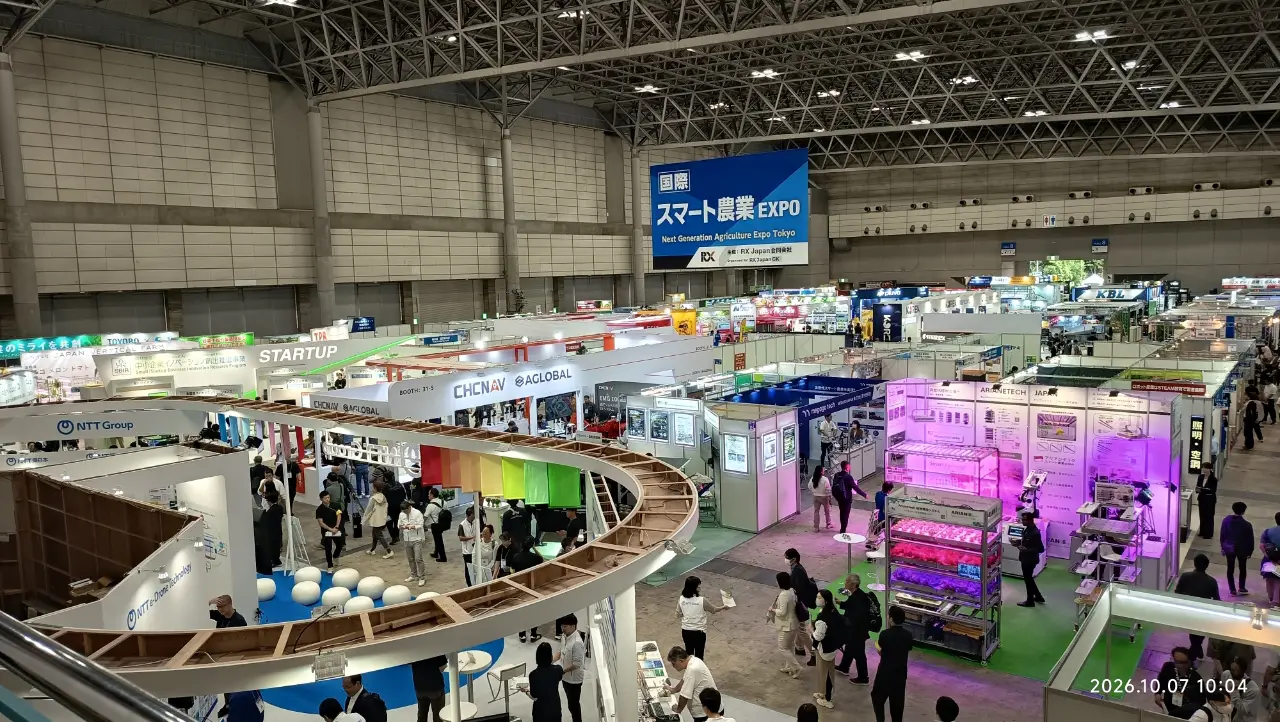
Industrial automation, digital twins, new cultivation systems and conversations with the people developing them. My field report from Makuhari Messe.
In this article9 sections
- Finding my way around the exhibition
- Industrial engineering enters the growing room
- Sensors, automation and new cultivation concepts
- When technical expertise does not translate into a good conversation
- The questions that remained unanswered
- Resource efficiency and environmental questions
- A handshake, a bow and a few words of German
- Looking at the Asian market from Europe
- After two days at Makuhari Messe
I spent October 7 and 8 at J-AGRI Tokyo 2026 (Archive Link), walking through the exhibition halls at Makuhari Messe, speaking with manufacturers and examining technologies that I had previously encountered mostly through technical documentation, company websites or industry reports. My main interest was controlled environment agriculture (CEA) and vertical farming, but I also wanted to see what was happening in conventional agricultural machinery, robotics and other parts of the industry.
The exhibition, organized by RX Japan from October 7 to 9, was held alongside GARDEX and TOOL JAPAN. The organizer had announced approximately 1,000 exhibitors and more than 2,500 products and solutions across the combined events. For comparison, the previous Tokyo edition recorded 36,617 visitor entries in 2025.
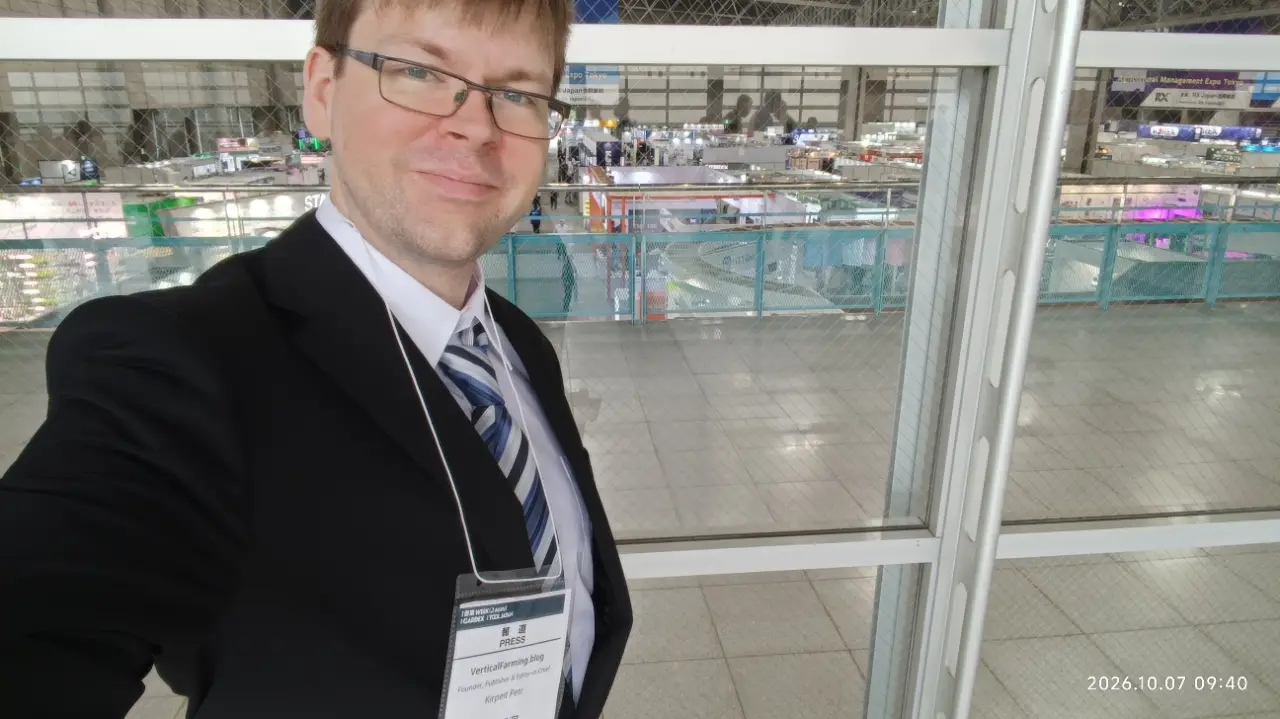
At the time of writing, the official visitor and exhibitor figures for J-AGRI Tokyo 2026 had not yet been published. These figures will be added to this report once RX Japan releases its final results. I attended the exhibition on October 7 and 8 as an independently accredited journalist, without external sponsorship for the trip.
Over the two days, I estimate that I spoke with representatives of around 50 companies. Not every conversation resulted in an exchange of business cards, nor was every product directly relevant to my reporting. In the end, I collected business cards from 39 companies whose technologies, business activities or potential for further investigation caught my attention. Some discussions lasted only a few minutes, while others developed into detailed technical conversations, possible interviews and invitations to visit company facilities. I returned with a substantial collection of photographs, notes and contacts that will take considerably longer than two days to work through.
Finding my way around the exhibition
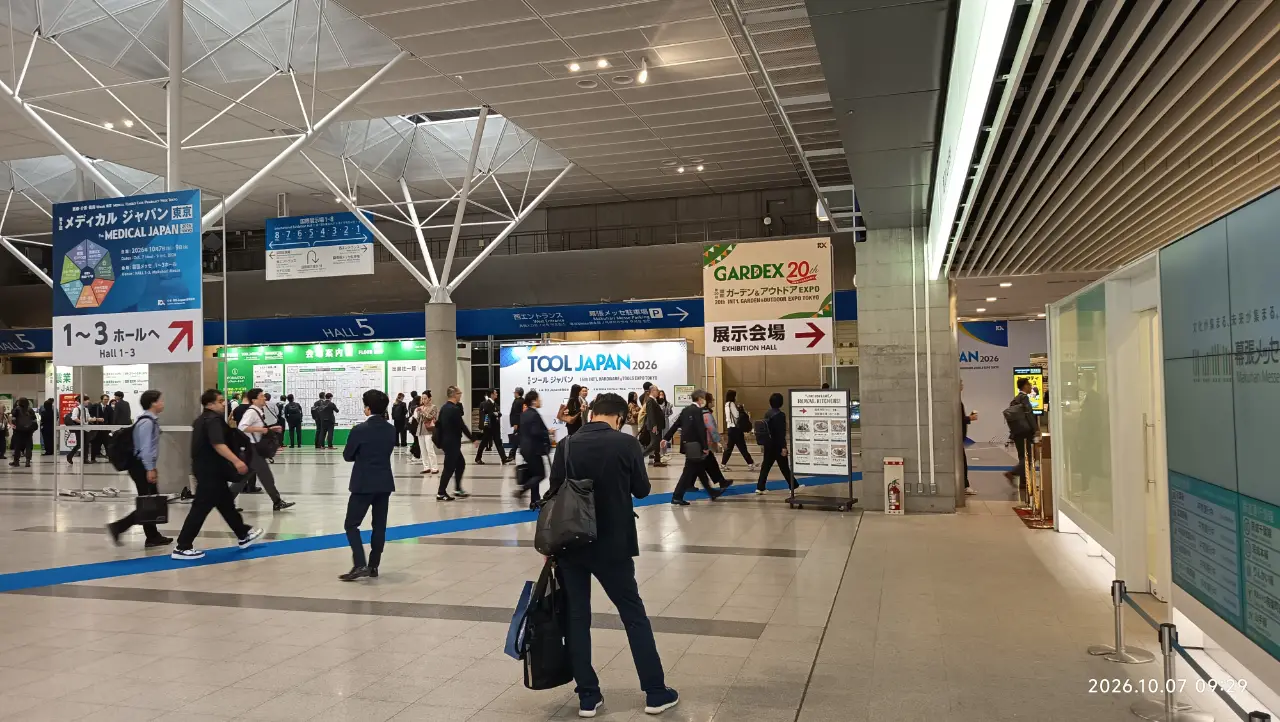
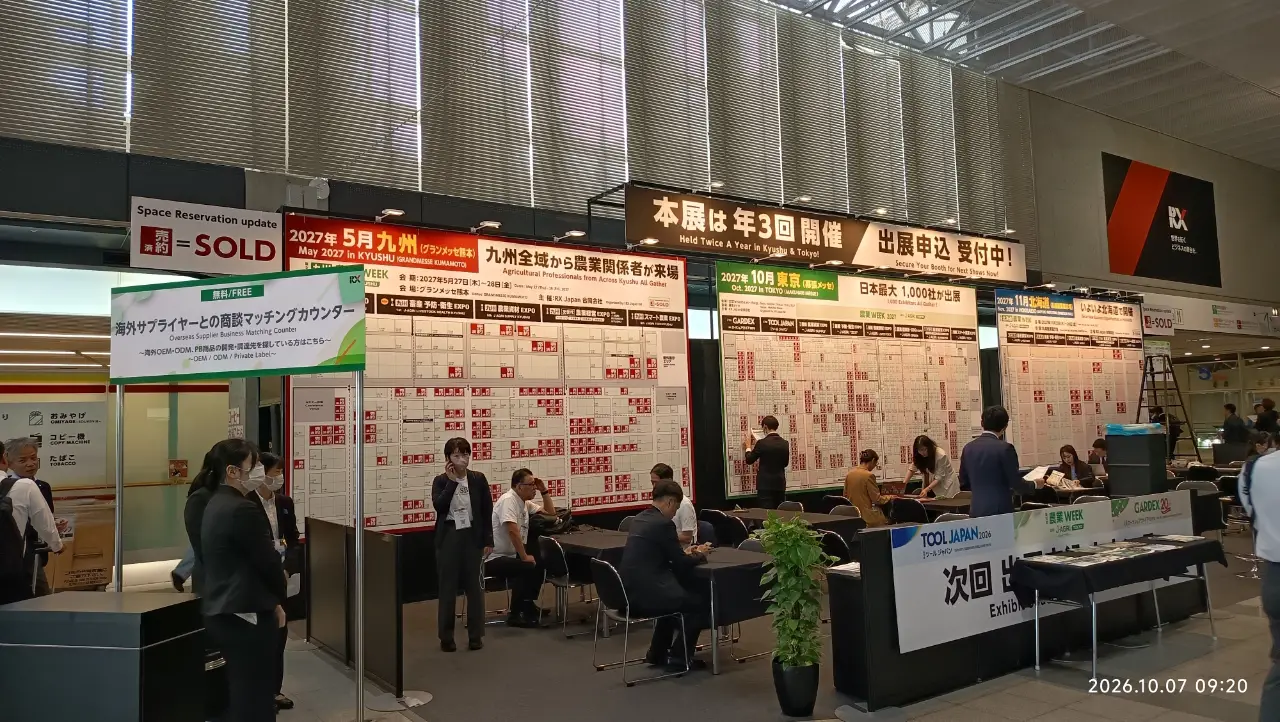
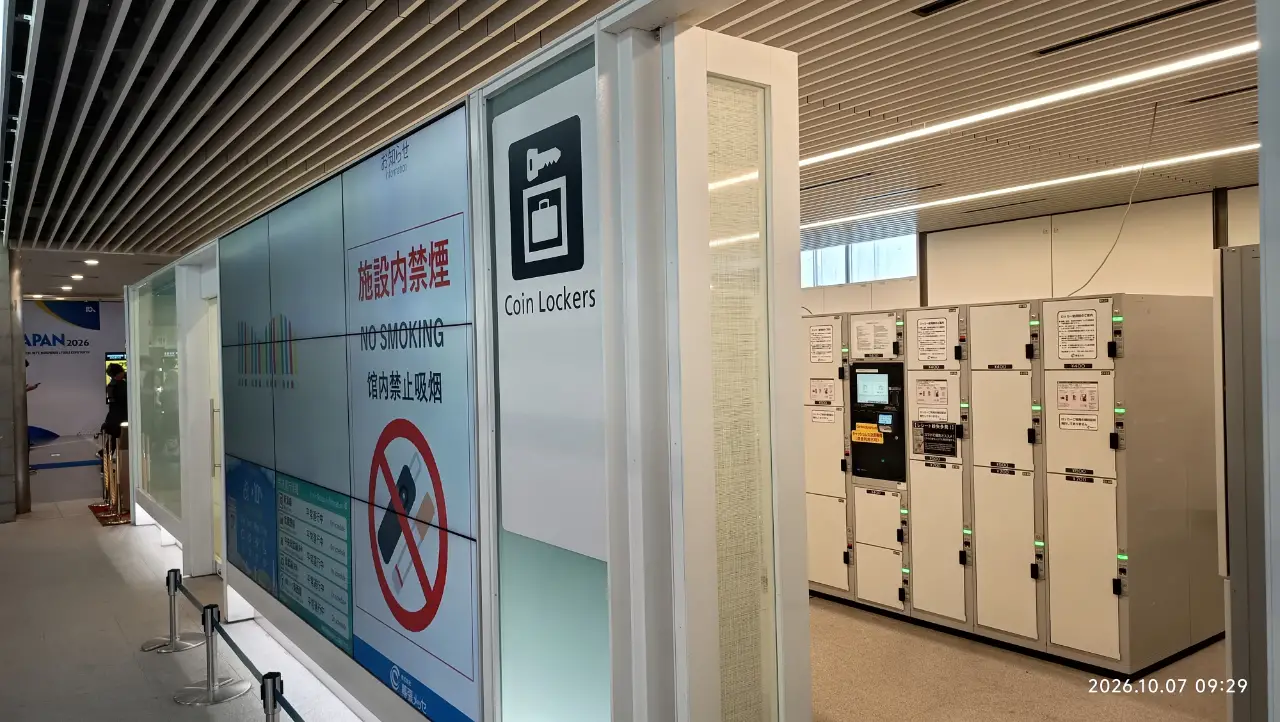
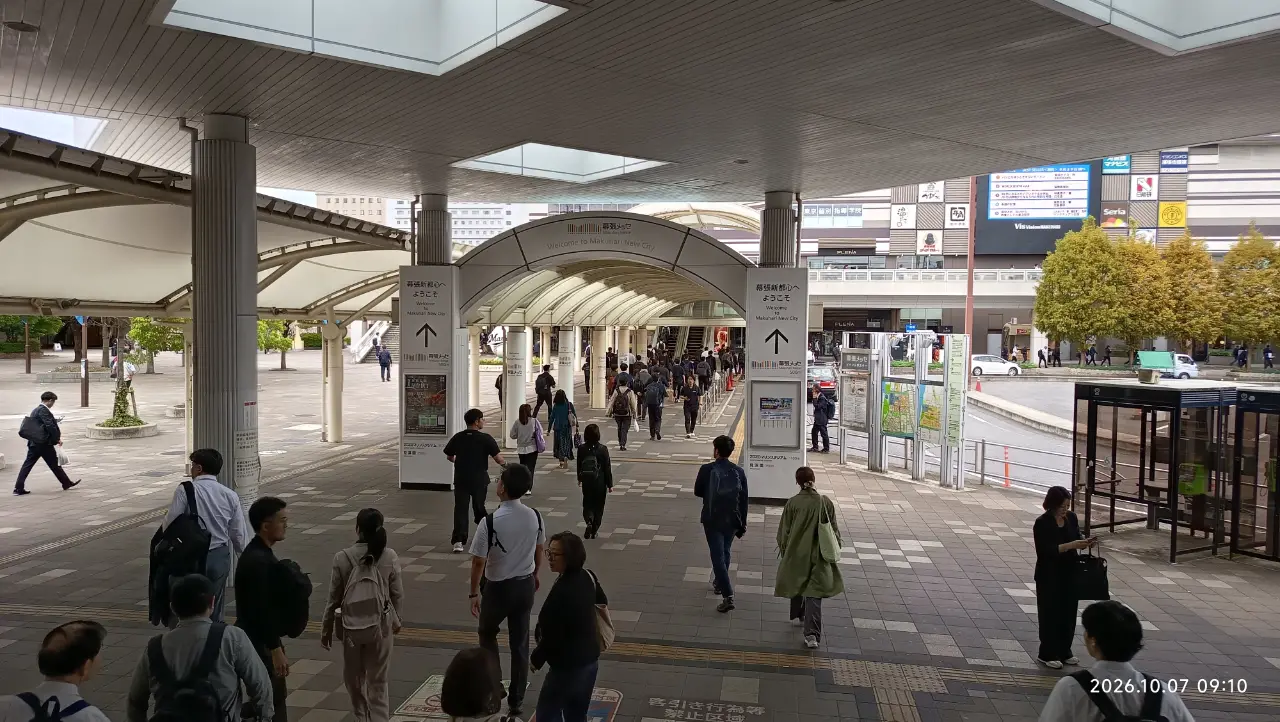
The first thing that surprised me was the entrance procedure. I was accustomed to exhibitions where visitors first report to a registration desk and collect their badges. At Makuhari Messe, I could enter the public access area directly. There were coin lockers, paid workspace facilities, a business matching area and large maps showing the exhibition layout. The actual access control took place at the individual hall entrances, where staff scanned the QR codes on visitors’ badges (registration online) once the doors opened at 10 a.m.
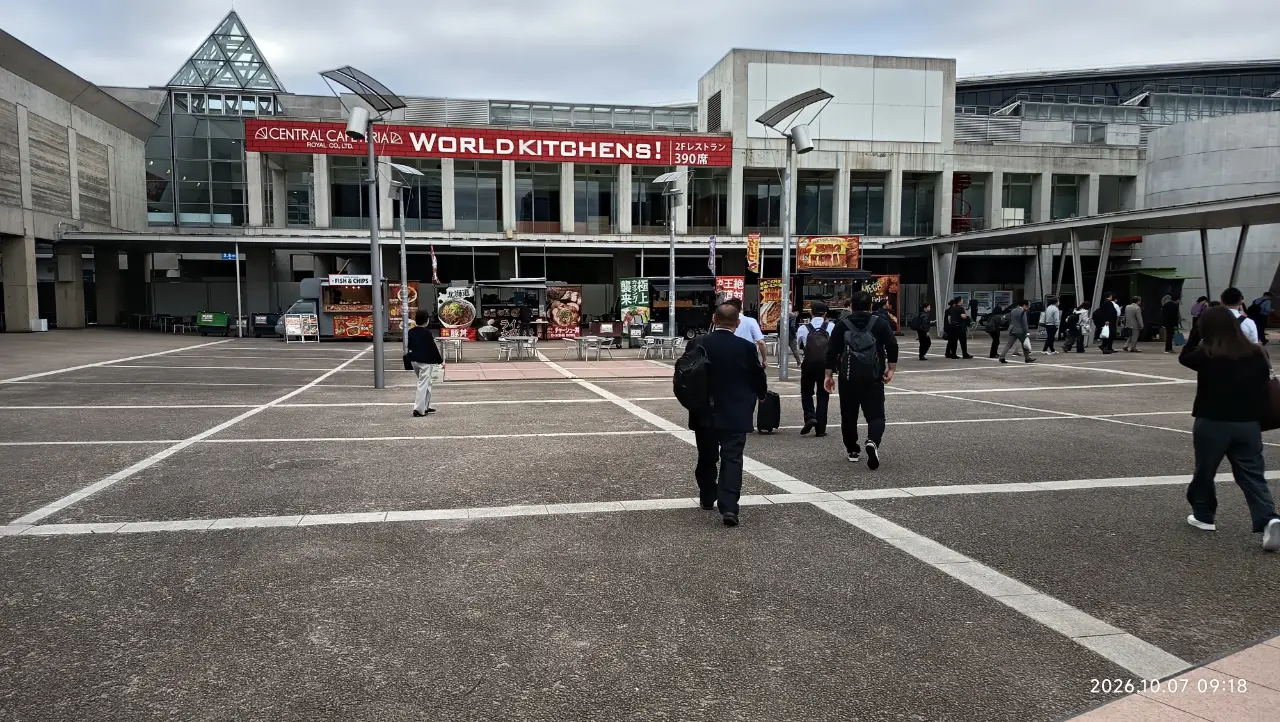
The arrangement worked well. Food trucks were available outside the building, and I also encountered catering inside the exhibition. Despite the size of the event, I never felt that the halls were generally overcrowded. It was usually possible to stop, take photographs and examine equipment without obstructing other visitors. Individual stands attracted much larger crowds, though. Makita was one example where I found it difficult to get close enough for a proper look.
The different exhibition sections attracted noticeably different audiences. I would be reluctant to say that one sector dominated the event. The agricultural technology and supply areas appeared particularly active during my visit, but visitors interested in gardening tools or conventional machinery naturally spent their time elsewhere. With several halls to explore, I had to make decisions about where to spend my time, and I concentrated on companies whose technologies or backgrounds offered something worth investigating beyond a short product presentation.
Industrial engineering enters the growing room
One of the more interesting patterns I encountered was the involvement of established industrial companies in agricultural technology. Their experience did not necessarily begin in agriculture.
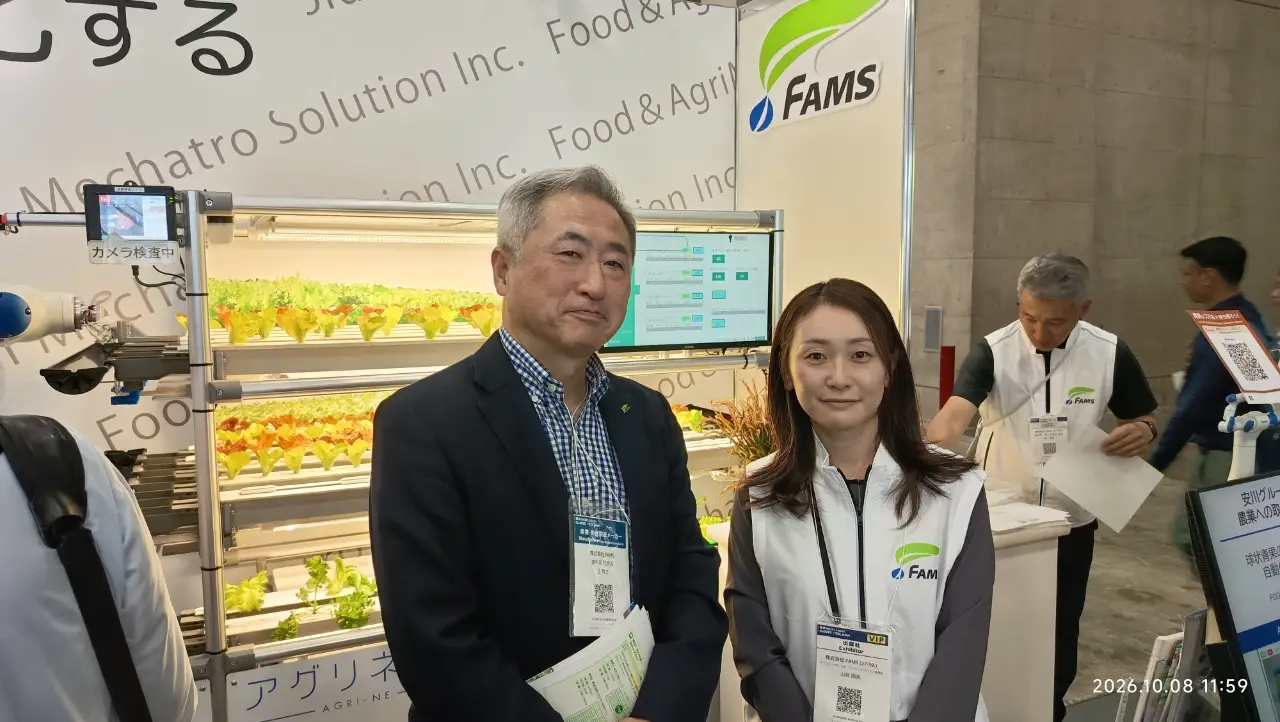
At Food & Agri Mechatro Solution (FAMS), associated with Yaskawa, I watched an automated cultivation system operate. Robotic mechanisms handled planting components, and a rail-based arrangement demonstrated how cultivation holders could be moved into and out of the growing system. The equipment was actually moving at the stand, which gave me a better impression of the engineering than a video presentation would have done. I spoke with Chief Engineer Takayuki Sho, who invited me to visit the company’s facilities in Niigata. I hope to follow up on that invitation, particularly because questions about maintenance, throughput and operation over longer periods cannot be answered by a brief trade-show demonstration.
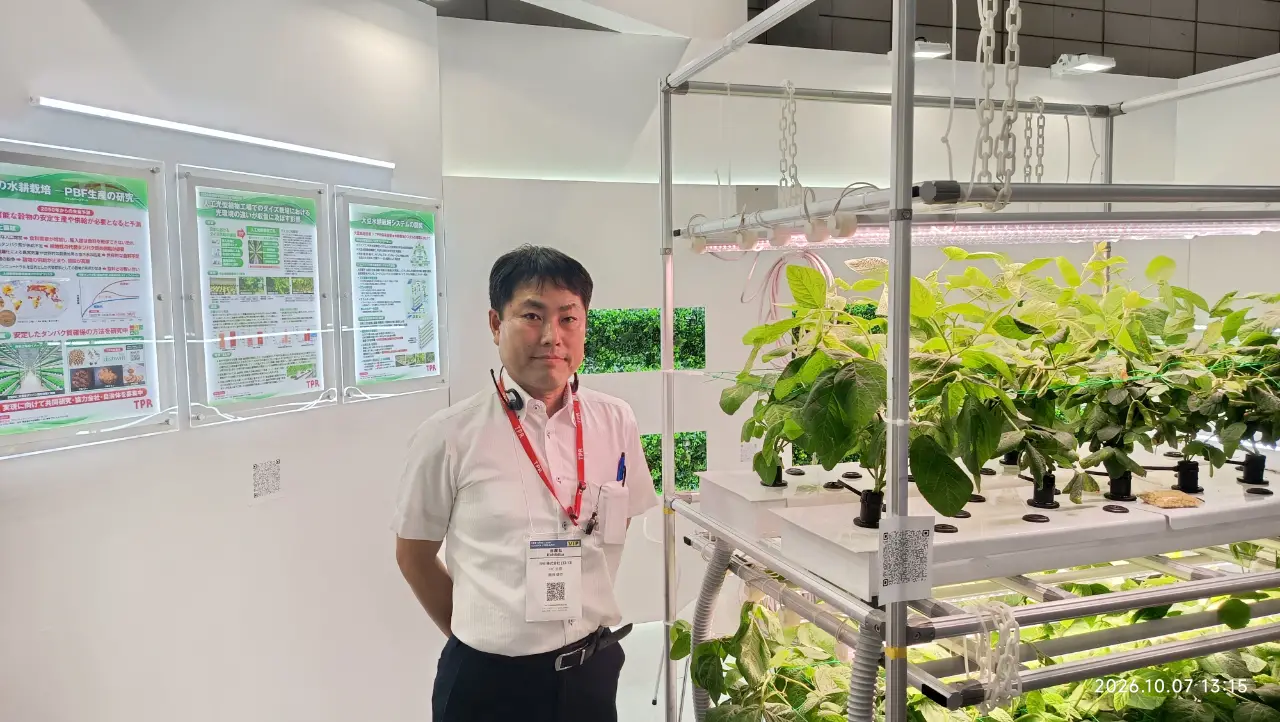
A different example came from TPR Co., Ltd., an automotive components manufacturer. I spoke with Kensaku Fujita, Manager at its Frontier Innovation Center, about the company’s experiments with growing soybeans in a vertical farming environment. I found the project interesting precisely because it was not what I expected from an automotive supplier. An innovation team had decided to investigate whether its expertise and resources could be applied to agricultural production. Whether the experiment becomes a larger commercial activity remains to be seen, but I appreciated the willingness to try something outside the company’s established business.
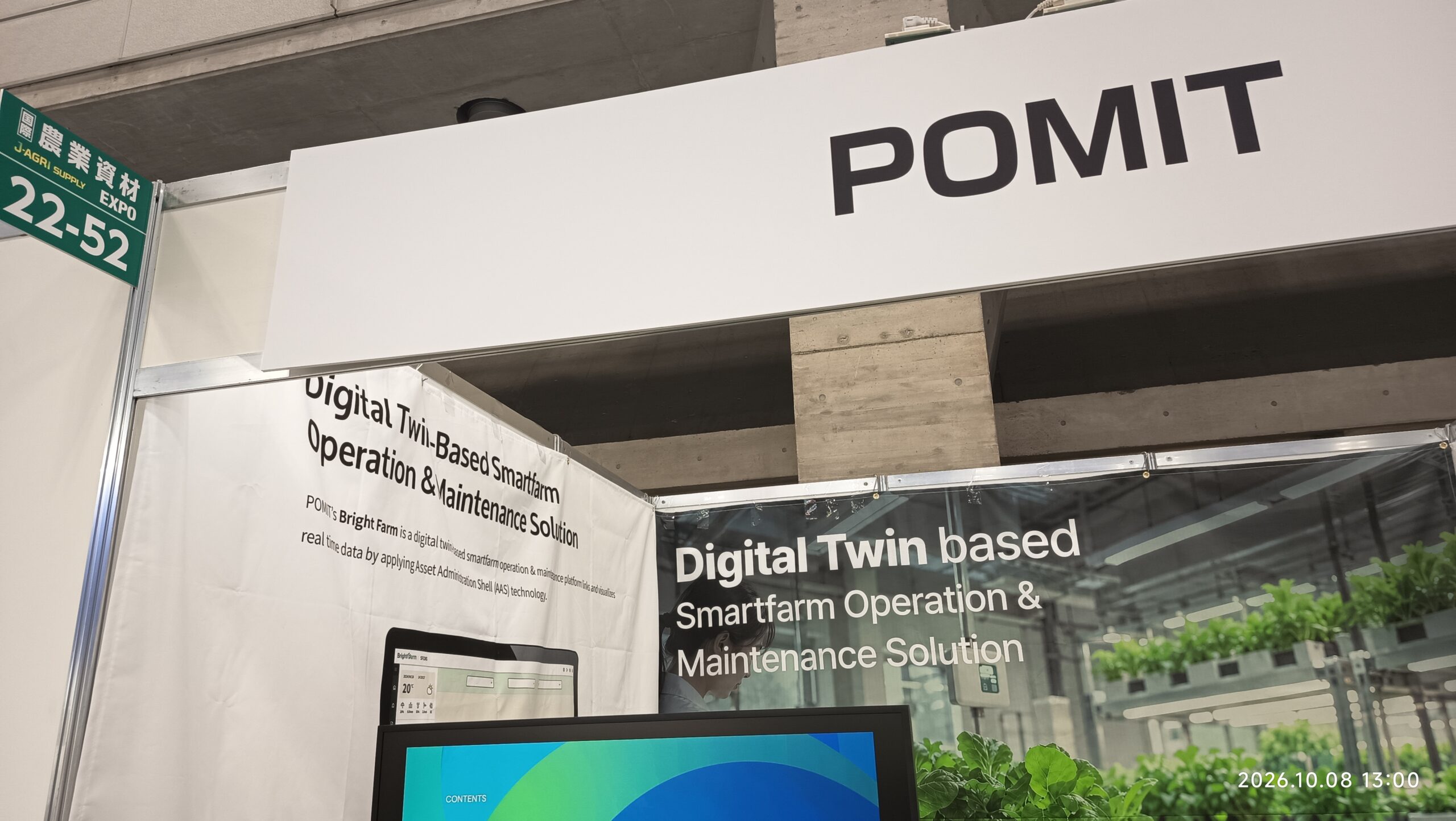
Photo: © 2026 verticalfarming.blog
South Korean company POMIT approached agricultural technology from another direction. Its experience includes digital systems for power plants and other industrial infrastructure, and company representatives explained how that background had led to work in smart farming, including projects connected to demand from the Middle East. I returned to the stand several times before I could have a longer conversation with the relevant representative, but the discussion was worth the effort.
The company presented its digital twin approach, which I found particularly interesting for vertical farming. A farm may appear relatively straightforward when viewed as rows of racks and cultivation equipment, but digitally representing its operations involves a substantial number of interacting systems. Climate conditions, lighting, irrigation, energy use and equipment operation all have to be considered. POMIT was the only exhibitor I personally encountered presenting this particular type of digital twin application for vertical farming, although I cannot rule out that other companies at the exhibition worked on similar solutions.
The conversation left me wanting to investigate the technology more thoroughly. I am interested in what can actually be modeled and measured, how closely a digital system represents the physical farm and what practical decisions growers can make with the information.
Sensors, automation and new cultivation concepts
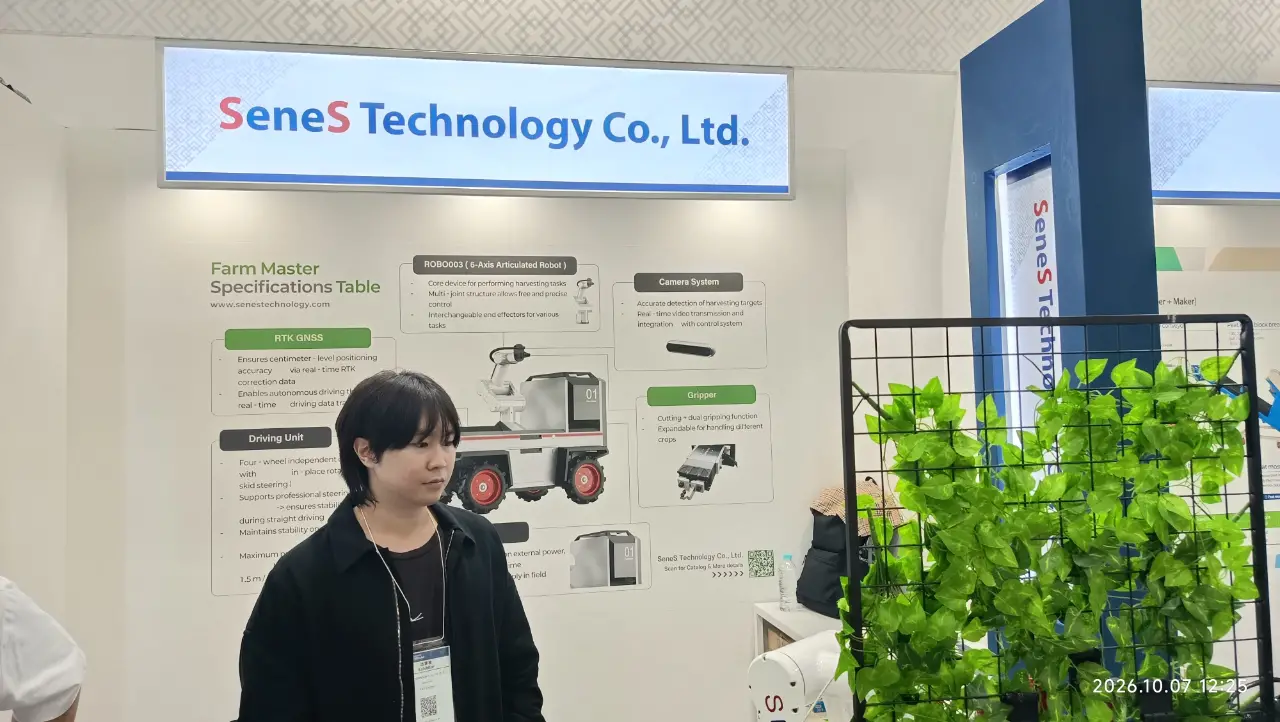
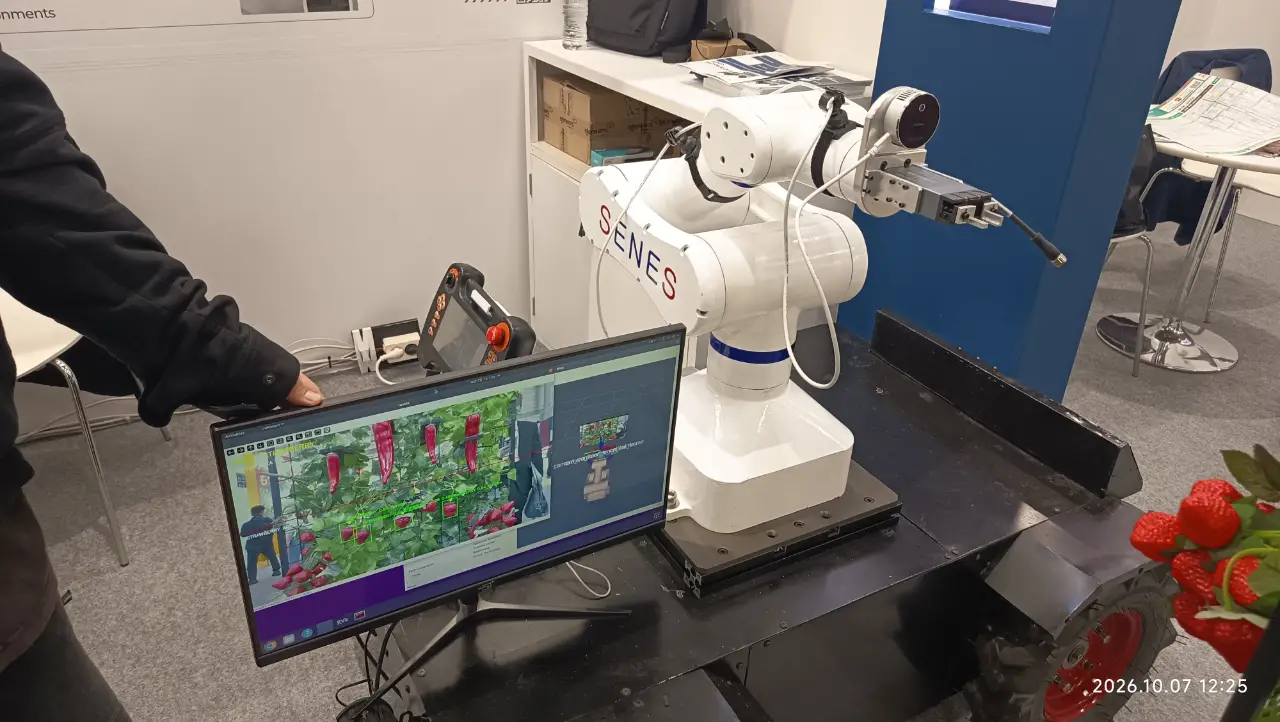
Automation appeared in several forms across the exhibition. The South Korean company SeneS Technology Co., Ltd. presented a harvesting robot intended to identify ripe fruit through optical recognition, with applications involving crops such as strawberries and peppers. I also saw autonomous equipment moving in demonstration areas and watched robotic arms perform parts of their intended tasks.
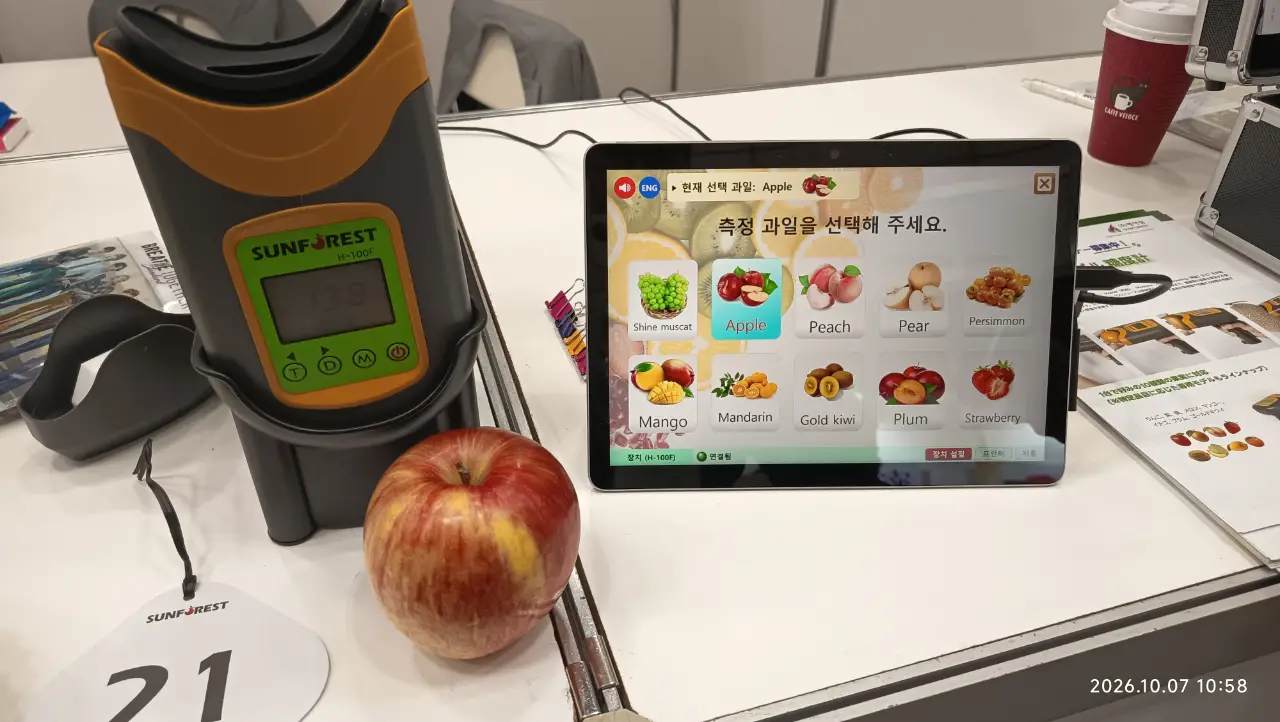
Photo: © 2026 verticalfarming.blog
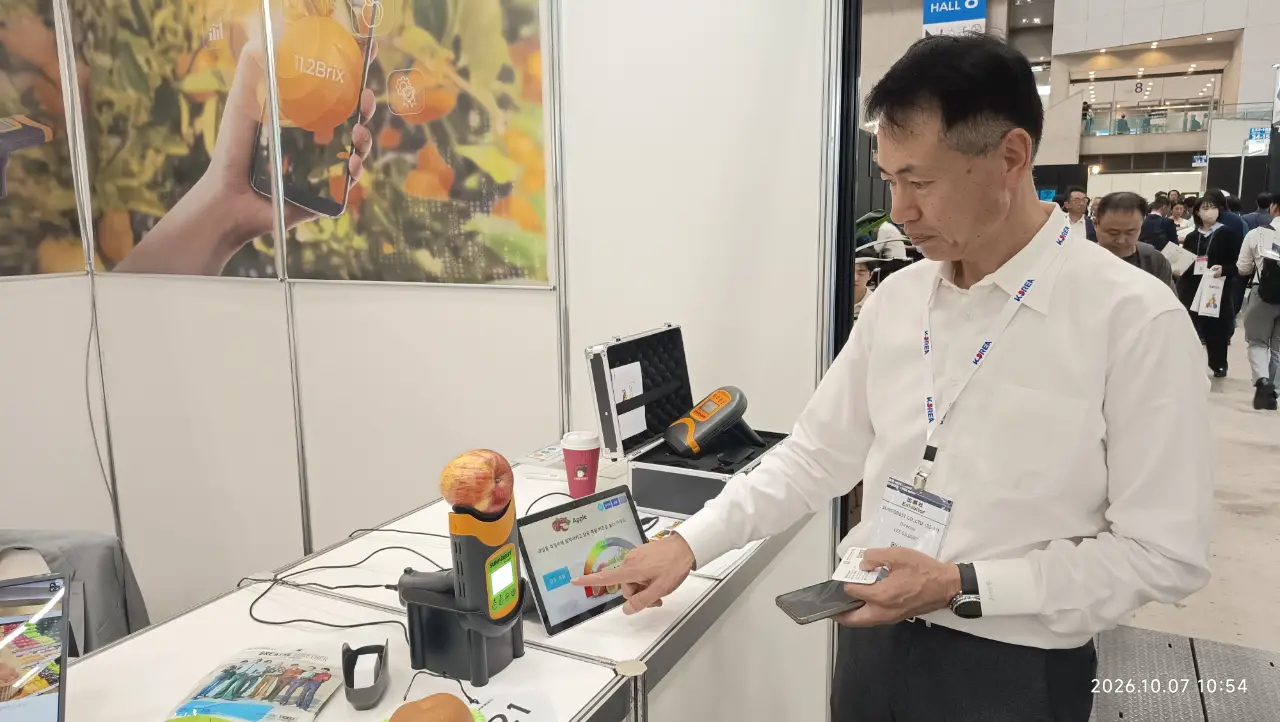
Photo: © 2026 verticalfarming.blog
At SUNFOREST, a South Korean company represented by Gilbert Lee, I was shown a device for estimating fruit sugar content without destroying the produce. The representative demonstrated the measurement process and calibration. It was my first opportunity to examine this type of Brix measurement equipment in person, and I was interested in the sensing principle and how such a device might fit into commercial quality control. I photographed the demonstration and intend to examine the technical specifications more closely.
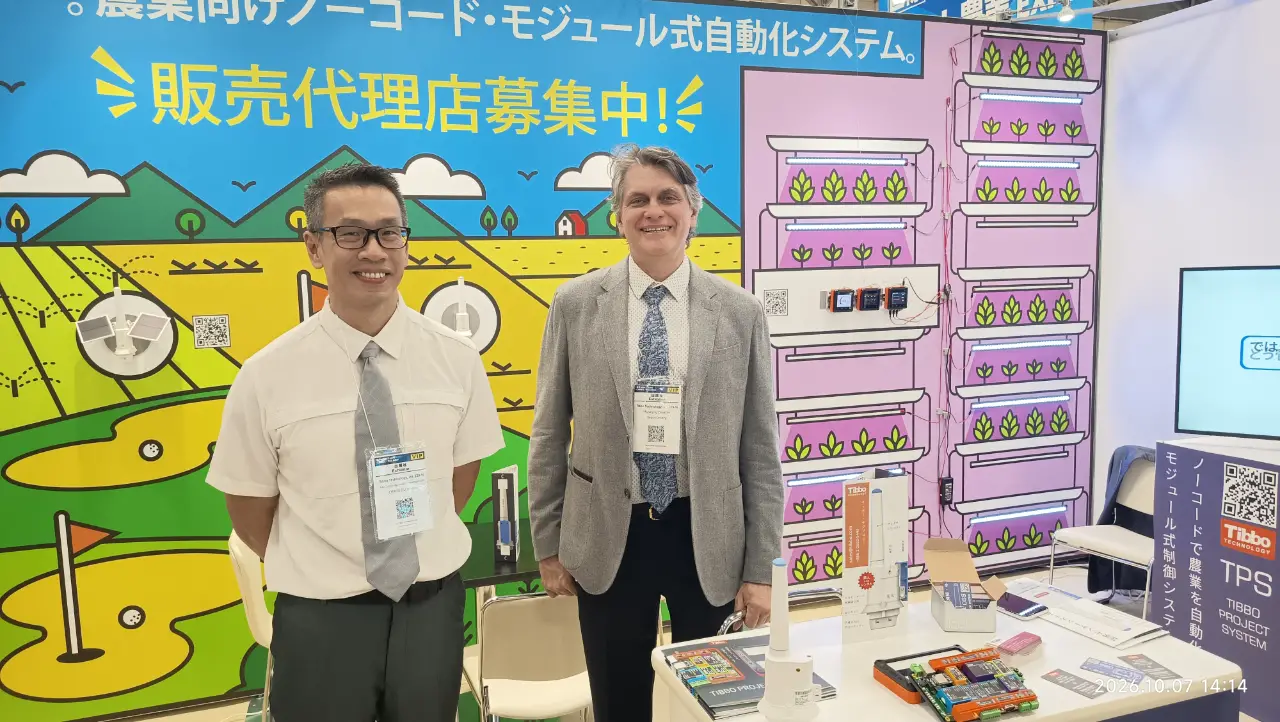
Photo: © 2026 verticalfarming.blog
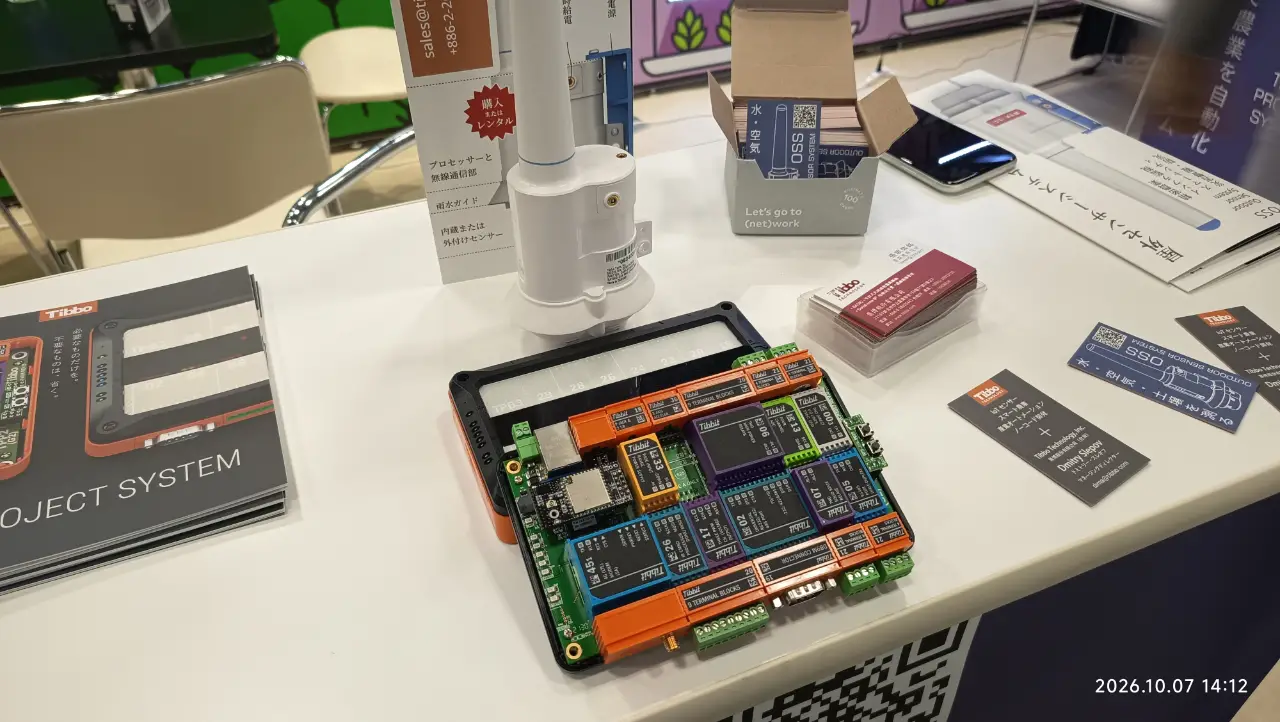
Photo: © 2026 verticalfarming.blog
Another conversation I particularly enjoyed was with Dmitry Slepov from Tibbo Technology, Inc. The company’s modular automation equipment appealed to me both technically and from a product design perspective. The hardware was housed in a modern, neatly designed enclosure, and the modular arrangement allowed customers to select the components needed for their particular automation or sensing application. I liked the idea of assembling a system from the required modules rather than purchasing a larger fixed configuration with functions that might never be used. We discussed the technology in more detail, and I plan to return to it in separate coverage.
I do not want to turn this overview into a catalogue of every exhibitor I met. Several companies deserve individual articles, particularly where the underlying technology is complex enough to require additional documentation or interviews. The purpose of this report is to describe what I encountered and why some of those encounters deserve further attention.
The same applies to alternative cultivation infrastructure. Sanyo Trading presented its AIR Farm concept, an inflatable agricultural growing structure. The larger version was described as having approximately 1,000 planting positions. It is an unusual approach to cultivation infrastructure, and I have enough photographs and discussion notes to examine it separately. I am especially interested in the costs and practical conditions under which such a structure could be used.
Aquaponic systems and fine-bubble water technologies also appeared among the exhibitors I visited. Representatives presented cultivation concepts and, in some cases, performance figures supported by technical documents, research material and comparisons between different test conditions. Two companies working with fine-bubble technologies also invited me to examine their operations more closely, creating the possibility of further visits and technical discussions.
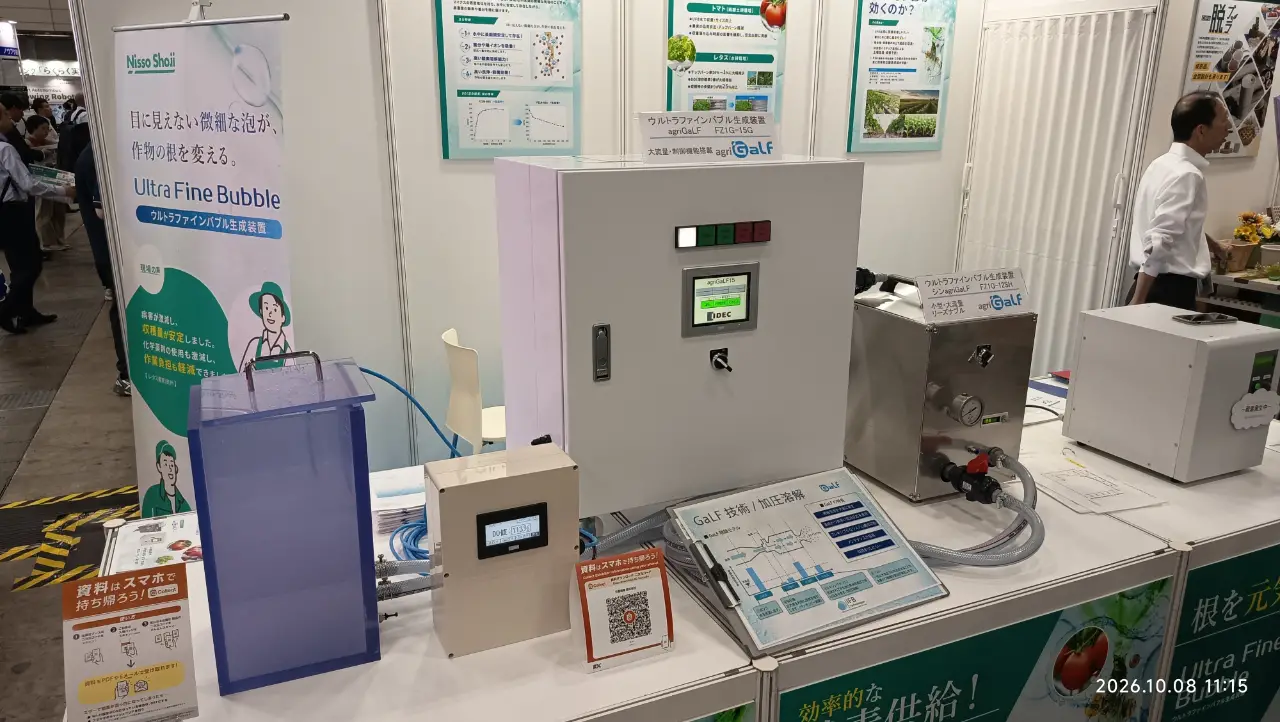
I found the fine-bubble presentations particularly interesting because some of the representatives were prepared to go beyond their sales material. They showed comparative data and explained the conditions under which the reported results had been obtained. That did not amount to independent verification of every performance claim, but it gave me a technical basis for asking more detailed questions. I would like to investigate these systems further, especially their energy requirements, operating costs and reproducibility under commercial cultivation conditions.
When technical expertise does not translate into a good conversation
Most of the exhibitors I approached were friendly and willing to discuss their products. Still, one aspect of the exhibition disappointed me: at several stands, it was surprisingly difficult to obtain a clear explanation of what a company was actually offering.
My professional background includes software development, electronics and technical systems, so I tend to ask questions about how a product works rather than stopping at its advertised capabilities. This sometimes led to conversations that went well beyond the prepared sales presentation. In a few cases, however, I had the impression that representatives were uncomfortable when asked to explain the technical details of their own products.
At ListenField, for example, I spoke with a representative about an AI-related system and asked which technical approach the company used, including whether a large language model formed part of the system. I was not given a clear answer during that initial exchange. Later, I spoke with Kyoshi Honda, company co-founder and technical specialist, who explained the technology and its applications in greater detail, as far as the exhibition setting allowed. His explanation was considerably more useful, and I intend to follow up with additional technical questions and an interview request.
I do not expect every representative to know every engineering detail. I also understand that someone may be an experienced specialist in one field without being familiar with every aspect of the software or hardware incorporated into a product. Nevertheless, I found it difficult to understand why some exhibitors seemed not well prepared for technical questions from visitors.
A more frustrating experience occurred at the stand of a major Japanese telecommunications provider presenting agricultural services. I introduced myself, explained my publication and asked about the company’s agricultural activities, including the types and sizes of farms it worked with. The representatives I spoke with were unable to provide clear answers, and the interaction felt unusually tense.
What disappointed me was the apparent lack of interest in developing the conversation. I was attending with a clearly identifiable press badge and had explained why I wanted to learn about the company’s work. Yet I left the stand knowing very little more than when I arrived. I cannot know whether the representatives were uncomfortable speaking English, insufficiently briefed or simply occupied with other concerns. My impression was limited to that particular encounter, but it contrasted sharply with the more productive conversations I had elsewhere.
Several other stands gave me a similar, though less pronounced, impression. I sometimes felt that companies had invested considerable effort in developing their products but had given less thought to how those products would be explained to visitors. I am not suggesting that every engineer should receive extensive sales training. However, a basic ability to introduce a product, understand what a visitor is asking and involve the appropriate colleague would make a considerable difference.
Language barriers added another layer of difficulty. I frequently began conversations by asking in Japanese whether anyone spoke English. Sometimes a colleague was called over; sometimes we continued using translation applications, simple phrases or gestures. Several South Korean representatives I met were comfortable speaking English, while at Japanese booths the situation varied considerably. I also met people who knew a few German words, which occasionally made an otherwise difficult conversation much easier.
I do not expect every Japanese engineer or salesperson to speak English. I am a visitor in Japan, and my own Japanese is still limited. I also noticed that some representatives appeared hesitant to use English even when they understood parts of the conversation. Translation tools helped, but technical discussions were often slower and less precise than they would have been in a shared language.
For international businesses, the experience reinforced my view that language skills and an understanding of local communication habits are practical assets. An exhibition can introduce people who would otherwise never meet, but those introductions only become useful when both sides can communicate what they need.
The questions that remained unanswered
One company whose presentation left me with unanswered questions was the Japanese company iFARM, which is unrelated to the European vertical farming company of the same name. After introducing myself and my publication, I spoke with an English-speaking member of the team about their cultivation approach, which they associated with H3O2. As I was unfamiliar with the concept, I looked into it before asking more detailed questions about the claimed benefits for plant growth.
The company presented cultivation samples intended to illustrate differences in growth, but I was unable to establish from the demonstration alone whether those differences resulted from the proposed treatment. When I asked for independent laboratory results or other verifiable evidence supporting the company’s claims, none could be provided during our conversation. My subsequent review of the company’s website did not resolve those questions either.
I therefore left the stand unconvinced by the evidence presented, although that should not be taken as a judgment on whether the underlying approach works. There may be additional research or documentation that was simply not available during the exhibition. I intend to contact the company again by email to give its representatives an opportunity to clarify the technology and provide supporting evidence.
Resource efficiency and environmental questions
Sustainability was present at J-AGRI Tokyo, although I encountered fewer explicit discussions of carbon emissions and environmental commitments than I remember from some exhibitions I previously attended in Germany. During my visit, companies appeared more focused on adapting agriculture to difficult growing conditions, improving resource efficiency and reducing operating costs. I encountered discussions involving cultivation systems, water treatment and approaches intended to address temperature or drought-related challenges. This is a personal comparison between exhibitions I attended, rather than a measurement of how much attention the organizers or exhibitors devoted to sustainability.
One discussion about flexible solar modules stayed with me. I have worked in electrical engineering and previously in the solar industry, so I was interested in the technical specifications of the product. The performance figures presented appeared attractive, but the extremely thin, flexible construction immediately made me question how the materials could be separated at the end of the module’s life. When I asked about recycling, the representative told me that the company had no recycling process for the product and that it would become ‘general waste’ after its useful life. Given the integrated construction, I was concerned that recovering the individual materials could be particularly difficult. I would need the full material specification and information about available recycling technologies before concluding that recovery is technically impossible, but the answer was disappointing. In my view, questions about material recovery deserve attention alongside power output and operating lifetime.
A handshake, a bow and a few words of German
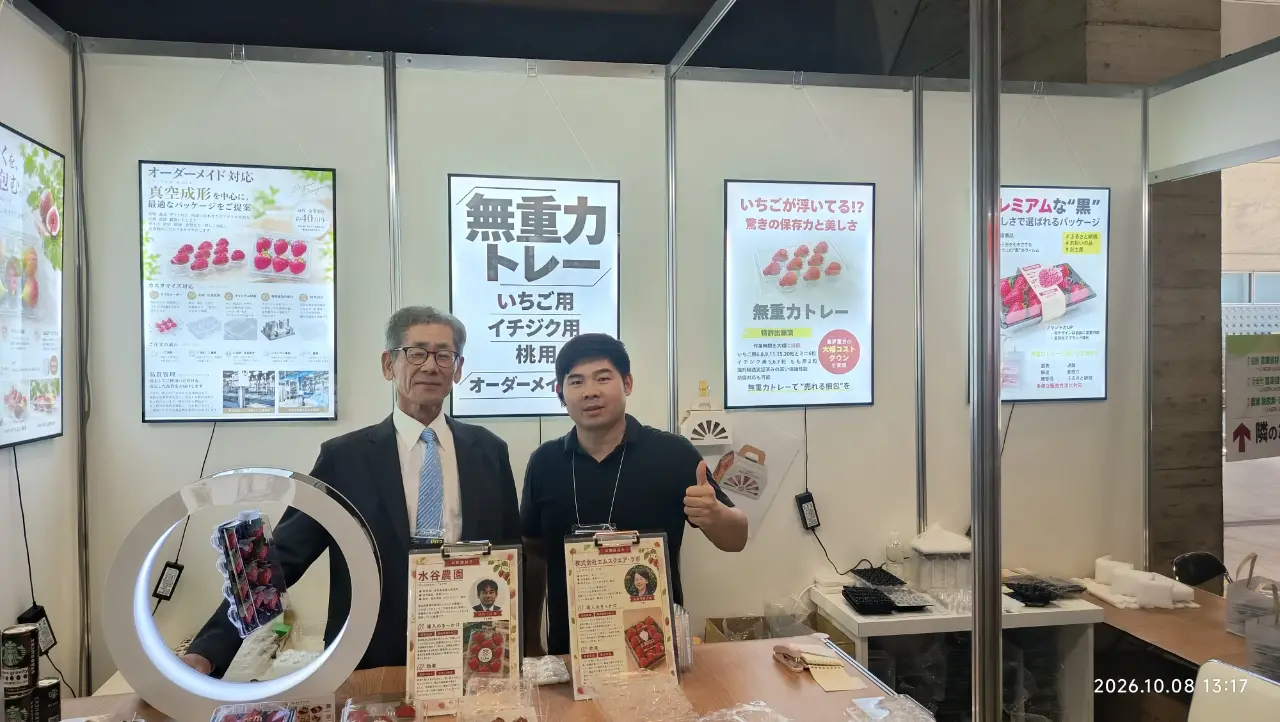
Photo: © 2026 verticalfarming.blog
One of the encounters I remember most clearly had little to do with machinery. At the stand of Maranatha Co., Ltd., I spoke with Motoo Murakami about the company’s work with packaging materials and related manufacturing. During our conversation, he mentioned having visited Germany around ten years earlier and was able to speak a few words of German. My Japanese is still limited, so we were both making an effort to communicate in the other’s language. That made the conversation particularly pleasant.
At one point, I bowed in the Japanese manner while Murakami extended his hand for a handshake. When I moved to shake his hand, he began to bow. For a moment, we had effectively exchanged roles, each trying to follow the cultural habits of the other. We both meant well, and the situation was rather amusing.
I had made a point of following Japanese business etiquette throughout the exhibition, especially when exchanging business cards. Presenting and receiving them with both hands, acknowledging the person’s name and showing appreciation for the exchange were small gestures, but they were generally received warmly. Handshakes were less common with the Japanese representatives I met, while several South Korean and other international contacts were more accustomed to them.
The encounter with Murakami was a particularly good example of why I think cultural understanding matters in international business. Neither of us needed to perform every custom perfectly. We simply had to be willing to meet the other person halfway. I have found that kind of openness useful throughout my time in Japan, and I think companies entering unfamiliar markets would benefit from taking it seriously.
Another pleasant conversation took place with Ryosai Miyoshi, who spoke English and took time to explain his family’s business. I understood him to be the son of the company’s managing director, which made me curious about his own future role. I jokingly suggested that he might one day take over the business, and the remark was met with laughter. It was a relaxed exchange and another example of how much easier business conversations become when people are willing to engage beyond a rehearsed product presentation.
Looking at the Asian market from Europe
The openness I encountered during the exhibition was particularly interesting in light of conversations I had conducted with companies in Europe and North America during the preceding months. Some Western companies had told me that Japan was not part of their current priorities, while others had limited budgets for activities related to the market. At J-AGRI Tokyo, I met several manufacturers interested in reaching customers in Europe or improving their visibility among Western agricultural professionals. Other companies preferred to concentrate on Japan, and I respected that position as well.
These are observations from my own conversations, not a representative survey. Nevertheless, I found the willingness to discuss international opportunities encouraging. It also made me consider how many companies remain relatively unfamiliar to Western industry audiences because of language barriers or limited international exposure.
I did not identify many Western visitors during my time at the exhibition, although I have no information about the complete visitor or press accreditation lists and could not reliably determine visitors’ nationalities by appearance. I therefore cannot say how many European or American professionals attended. What I can say is that the event gave me access to companies and technical discussions that I would have found much harder to arrange remotely.
For European technology companies, growers and investors, I think there is a practical reason to pay attention to exhibitions such as J-AGRI Tokyo. Some of the manufacturers I met are developing equipment relevant to existing agricultural operations, while others are entering the field from industrial engineering or electronics. Whether those technologies are competitive outside Asia depends on pricing, performance, standards and local market requirements, but ignoring them simply because they are less familiar would be a mistake.
Language and local business knowledge can make a substantial difference here. I would have been able to conduct more detailed conversations if my Japanese had been stronger. For a company planning to enter Japan, working with people who understand the language and business culture could make that process considerably easier.
After two days at Makuhari Messe
I left the exhibition with a generally positive impression, although not every product or conversation convinced me. I saw functioning machinery, experimental cultivation systems and technologies that I want to investigate further. At the same time, some exhibitors struggled with basic technical questions, while others made performance claims that I could not independently verify.
The strongest impression was the variety of companies involved. Established industrial manufacturers were exploring agricultural applications, smaller businesses were presenting specialized solutions, and several international exhibitors were interested in markets beyond their own region. I found particularly interesting material in industrial automation, digital twins, cultivation infrastructure and water treatment.
There is now enough material for several follow-up articles. Some will focus on individual companies, while others will compare technologies addressing similar agricultural problems. I intend to request technical documentation and further interviews, and where practical, visit production or research facilities.
I would not use two days at a trade exhibition to make a general forecast about the Asian agricultural technology market. But the visit gave me a much better understanding of some of the companies working within it, and it also showed me where my own research needs to go next.
For now, I am glad I attended. The technologies were interesting, the conversations were often more useful than expected, and I came away with contacts I hope to meet again.
Petr Kirpeit attended J-AGRI Tokyo 2026 on October 7 and 8 as an independently accredited journalist. This report draws on his firsthand observations, conversations with exhibitors and demonstrations witnessed at Makuhari Messe. Technical performance claims attributed to exhibitors have not necessarily been independently verified.
The visit was conducted without external trip sponsorship. AI-assisted editorial tools are used in accordance with the publication’s disclosed editorial methodology.