
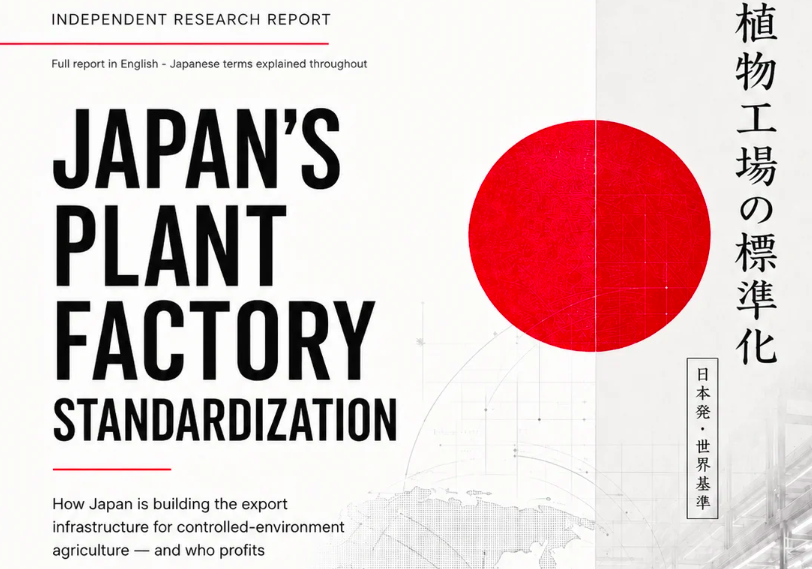
I’ve been working on this report for about three months now, not writing it once and shipping it, but going back into it repeatedly as new primary sources surfaced, correcting things I’d gotten wrong, and folding in developments as they happened. Japan’s plant factory policy has kept moving during that time, so the report had to move with it.
In this article5 sections
What it turned into: a 52-page account of how Japan is actually building this industry, based on Japanese cabinet documents, court bankruptcy filings, corporate disclosures, and the complete official membership rosters of the country’s plant-factory industry associations, cross-checking every company mentioned against both lists by hand. Not summarized coverage. Primary sources, in Japanese, verified, and re-verified as the story kept developing.
Three things came out of it that I haven’t seen written up anywhere else, in any language.
I won’t name names here, that’s what the report is for. But the shape of it is worth sharing.
First: this isn’t a new plan. The policy that made headlines this year has roots going back well over a decade. Professor Toyoki Kozai, who literally wrote the field’s foundational textbook, was already describing this as a future export industry back in 2010. The industry body coordinating today’s standardization push was founded years before anyone outside Japan was paying attention. The investment figure everyone’s citing didn’t create a strategy. It funded one that had already been quietly assembling itself.
Second, and this is the part that surprised me most: companies over there fail too, they just fail differently. A couple of the country’s most established plant-factory operators have gone through serious financial trouble over the past decade, one of them fairly recently. In the US, that kind of story usually has one ending. Over there, it didn’t.
The reason isn’t that these companies are simply better run. It comes down to a different economic logic underneath the whole system, one built more around long-term stability than pure profit-maximization, where an industry’s own institutions are structured to absorb a member’s failure rather than let the market simply clear it. I mapped exactly how that absorption works, company by company.
Third: the export story is a lot narrower than the headline version. Of the companies I profiled in depth, only a handful have anything resembling a verified US or European foothold. The rest of the international activity is pointed toward Southeast and Central Asia, or hasn’t picked a market yet. If you’re trying to size this as an opportunity rather than just nod along with a headline, that distinction is the one that actually matters.
What’s actually in the 52 pages
This isn’t five bullet points stretched thin. Here’s roughly how it breaks down:
- The policy itself: which ministry, which working group, which named officials, a sixteen-year timeline of how the strategy came together starting from the original academic research groups, and how the different investment figures being quoted in the press relate to each other (they’re not the same number, and conflating them is the most common mistake in existing coverage)
- The company map: individual profiles of every major player in the ecosystem, what each one actually makes and brings to the table, cross-checked against the full membership rosters of Japan’s plant-factory industry associations, plus two detailed bankruptcy case studies with court filing numbers, debt figures, and exactly who absorbed what, and when
- The numbers: market-size figures pulled from independent research data rather than press releases, including where the market has actually contracted in recent years, a company-by-company export map, and the long-term policy horizon out to 2050
- The reference material: an investment-relevant risk section with a full ticker table for the publicly traded companies involved, three documented company name-collision traps that could cost an investor real money if missed, a glossary of every Japanese term used in Kanji or Hiragana with Romaji spelling and a plain English explanation, and a complete chapter-by-chapter source list, so every claim in the report can be traced back to where it came from
Who this is actually for
People trying to evaluate this sector as an investment or business opportunity. Journalists and analysts who need something more solid than a recycled headline to write from. Anyone in controlled-environment agriculture who wants to understand what Japan is actually doing, not what a two-paragraph summary says it’s doing.
What this report is not
It’s not a supply-chain audit. I don’t have access to internal company data, procurement records, or production volumes beyond what these companies and courts have disclosed publicly, and I’m not going to pretend otherwise. What I do have is a carefully verified map of the public record: who’s connected to whom, who’s funding what, who failed and who absorbed them, and how the pieces of this ecosystem actually fit together, all in a language and level of source detail that almost nothing else written on this topic has bothered with.
Each copy is generated and licensed individually to the person who buys it: your name goes into the report itself, and the license is for you, not for redistribution.
See it before you decide
Get the table of contents, the methodology behind the research, and Chapter 2 in full, sent straight to your inbox.
Availability
The report is launching in stages, with pricing rising as it does. Current pricing and availability are shown below.
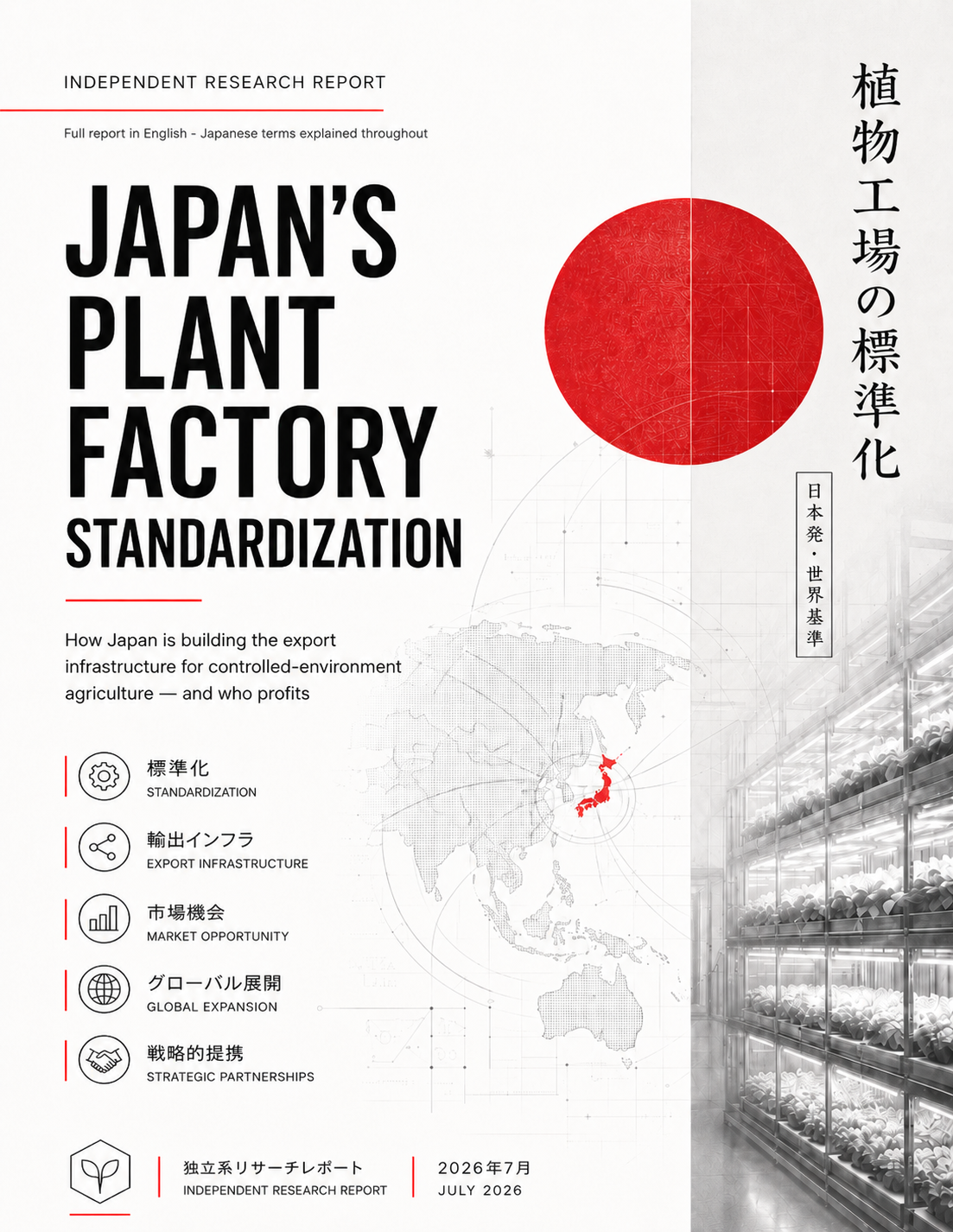
If you work in CEA, cover the sector as a journalist or analyst, or are trying to figure out whether Japan’s plant factory push is a real opportunity or a headline, this is built to be the starting point for your own diligence, not the last word on the subject.
Petr Kirpeit is an independent researcher and analyst, and operates verticalfarming.blog, verticalfarming.directory, and verticalfarmingevents.com. This report is one output of that work.
1 comment