
In this article5 sections
What happened
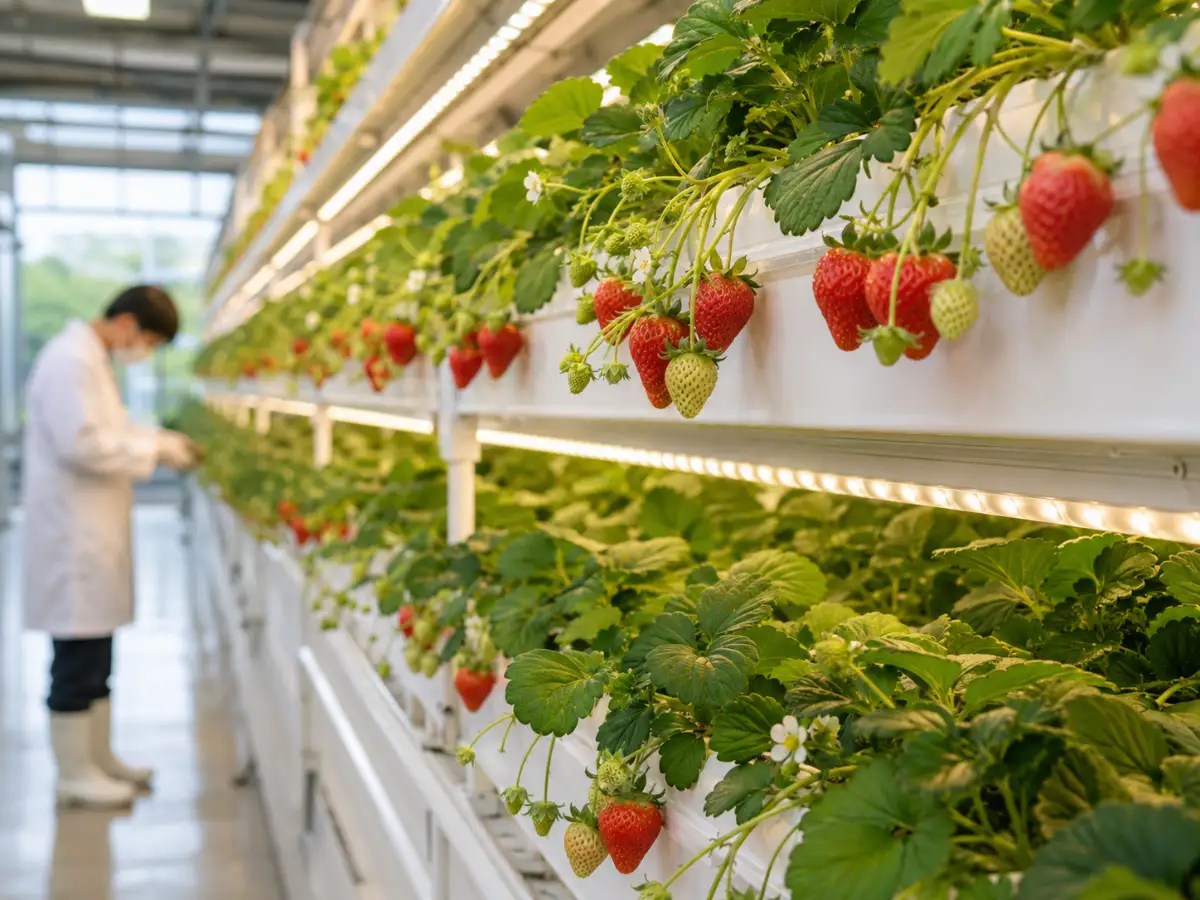
On 5 August 2026, Oishii Farm held the opening ceremony for its “Open Innovation Center” in Hamura City, on Tokyo’s western edge. It’s the US vertical-strawberry grower’s first dedicated research and development facility in Japan, and the next chapter for a company we’ve been following since its Series C round. Tokyo Governor Yuriko Koike attended and framed vertical farming as one answer to two problems the prefecture keeps running into: unstable weather and a shrinking farm workforce. CEO Hiroki Koga said at the ceremony that although Hamura is formally a research site, it’s already producing a meaningful volume of fruit, and some of that harvest will reach Japanese consumers before the year is out. Pricing and distribution haven’t been announced yet. With this move, Japan becomes Oishii’s third retail market after the US and Canada.

Why Japan, why now
The timing tracks a real supply problem, not just a marketing opportunity. Japan’s domestic strawberry supply has gotten shakier through the summer months as heat records keep breaking: 2025 was the country’s hottest summer since national record-keeping began in 1898, and food prices rose more than twice as fast as the broader consumer price index that year. That’s the specific gap Oishii’s climate-independent, indoor-grown fruit is aimed at closing. Field-grown berries carry a separate kind of risk too, contamination rather than climate, a pressure that’s shown up well outside Japan as well, as our coverage of Europe’s 2026 berry recalls laid out.
There’s a policy angle too. Food tech, vertical farming included, is one of seventeen sectors the Takaichi administration has named as strategically important for growth, part of the same government roadmap we broke down in detail. That’s not aimed at Oishii specifically, but it does mean the company is opening its Japan R&D hub into a policy climate that’s trying to make this kind of investment easier, not harder.
A Japanese-rooted company, investing back into Japan
Oishii’s story is usually told the other way around: a New Jersey-headquartered startup applying Japanese cultivation know-how to the US market. CEO Hiroki Koga was born in Japan, worked there as a vertical farm consultant, then moved to the US for an MBA at UC Berkeley. He’s described Oishii’s founding goal as bringing Japanese fruit culture to American consumers. Hamura flips that flow: expertise that started in Japan, got built out and commercialized abroad, is now coming back to fund R&D infrastructure inside the country it came from.
The crop choice fits the same pattern. Much of Japan’s earlier plant factory generation was built on leafy greens, a low-margin, price-sensitive category that has driven a good share of the industry’s well-documented startup economics problem. Oishii has stayed away from greens entirely and bet instead on the harder technical problem of pollinated fruit sold at a premium. Hamura’s stated job is exactly that: breeding and cultivation research across hundreds of strawberry varieties, plus development of the sensors, climate control, and packaging equipment needed to keep scaling it.
Where this fits in the bigger picture
On its own, an R&D center opening is a modest piece of news. But Oishii didn’t arrive at Japan’s plant factory sector from nowhere, and it isn’t building in isolation. The country has spent sixteen years and a recent ¥4.6 trillion government commitment assembling the industrial base, standards bodies, and capital relationships that a foreign-flagged, Japanese-led company like Oishii now gets to plug into on its way in. Understanding what Oishii is walking into, and what it means that a company built abroad is now investing back into that base, is easier with the fuller picture in view: how this sector actually formed, how its best-known pioneers filed for bankruptcy and simply kept operating under new ownership, a different outcome than the collapses that have taken down CEA pioneers elsewhere, and what “standardization” concretely looks like for a newcomer trying to scale here.
We’ve mapped that picture, sixteen years of it, in our independent research report, Japan’s Plant Factory Standardization.
It’s the context this article assumes; Oishii’s Hamura opening reads differently once you know what it’s opening into.
Further Reading
Sources3 references
- BigGo Finance, “U.S.-Based Oishii Farm to Sell Vertical-Farmed Strawberries in Japan from Tokyo-Area Facility” (5 Aug 2026): https://finance.biggo.com/news/c84c32df-8e87-4dc9-9e25-c86ddbcdf0fb
- AgFunderNews, interview with Oishii CEO on avoiding Japan’s leafy-greens mistakes (Jan 2025): https://agfundernews.com/learning-from-japans-mistakes-oishii-ceo-hasnt-spent-a-dime-on-leafy-greens-as-ultra-premium-strawberries-thrive
- CNBC Make It, background on Koga’s move from Japan to Berkeley MBA: https://www.cnbc.com/2022/07/16/how-oishiis-vertical-farms-grow-strawberries-that-sell-for-20-a-box.html